
Meet Our Animals
The Brandywine Zoo proves that great things do come in small packages. The Zoo features animals from the tropical and temperate areas of North and South America, Asia and Africa. Our animals range from more common species to the highly endangered. All enjoy natural settings and welcome your visit to the zoo. Some animals may be off exhibit during cold weather.
Iguana iguana
Green Iguana
Habitat
Geographic Region & Range
Diet
Physical Description
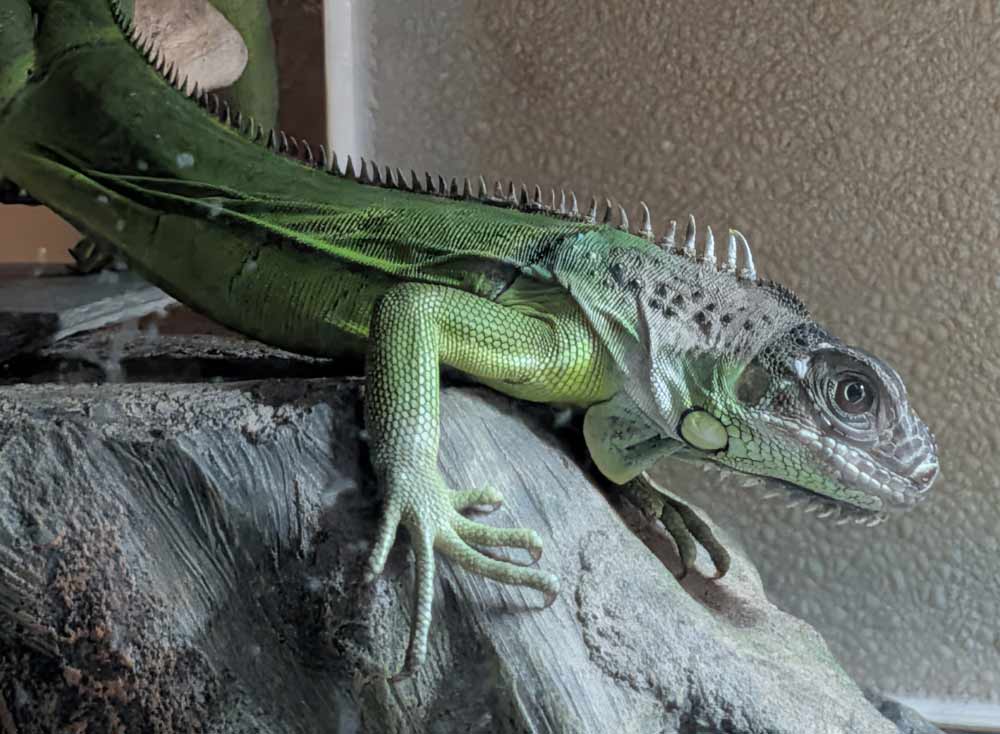
The green iguana are large, usually green in color but can also be brown or almost black. Juveniles are bright green & blue and become more ‘drab’ with maturity. They have a row of spikes along neck, back, and upper portion of tail; dark black rings on tail. Their primitive third “eye” on top their head is called a parietal eye; this group of photosensitive cells can detect movement and changes in light and is thought to help them evade overhead predators. The tail can make up about half of its body length and is primarily used for balance.
Lifespan
Natural Habitat: 8 years
Under Human Care: 10-20 years
Threats
Status
What are AZA Zoos doing for
Green Iguana
Due to their status as invasive in parts of the United States, there is not a Species Survival Plan (SSP) program for Green Iguanas. There are SSPs for other iguana species including the Fiji Banded Iguana, Grand Cayman Iguana, and Jamaican Iguana.
Fun Facts
Green iguanas have three eyes! Just under the skin on the top of their heads is a primitive “eye” that senses light and movement.
They can change color in response to season, temperature, and health (stress, hormones, etc.)
The word “iguana” is derived from a Spanish form of the Taíno name for the species, iwana.
Iguanas “talk” to each other by bobbing their heads! Slow head bobs are their greeting and fast head bobs tell others they need some space.