
Meet Our Animals

The Brandywine Zoo proves that great things do come in small packages. The Zoo features animals from the tropical and temperate areas of North and South America, Asia and Africa. Our animals range from more common species to the highly endangered. All enjoy natural settings and welcome your visit to the zoo. Some animals may be off exhibit during cold weather.

Dolichotis patagonum

Patagonian Mara

Patagonian Mara

Habitat

Found in open, arid grasslands, and brush lands. Home ranges fluctuates following food availability.

Geographic Region & Range

Central and southern Argentina

Diet

Primarily grasses; also eat cactuses, seeds, fruits, and flowers

Physical Description

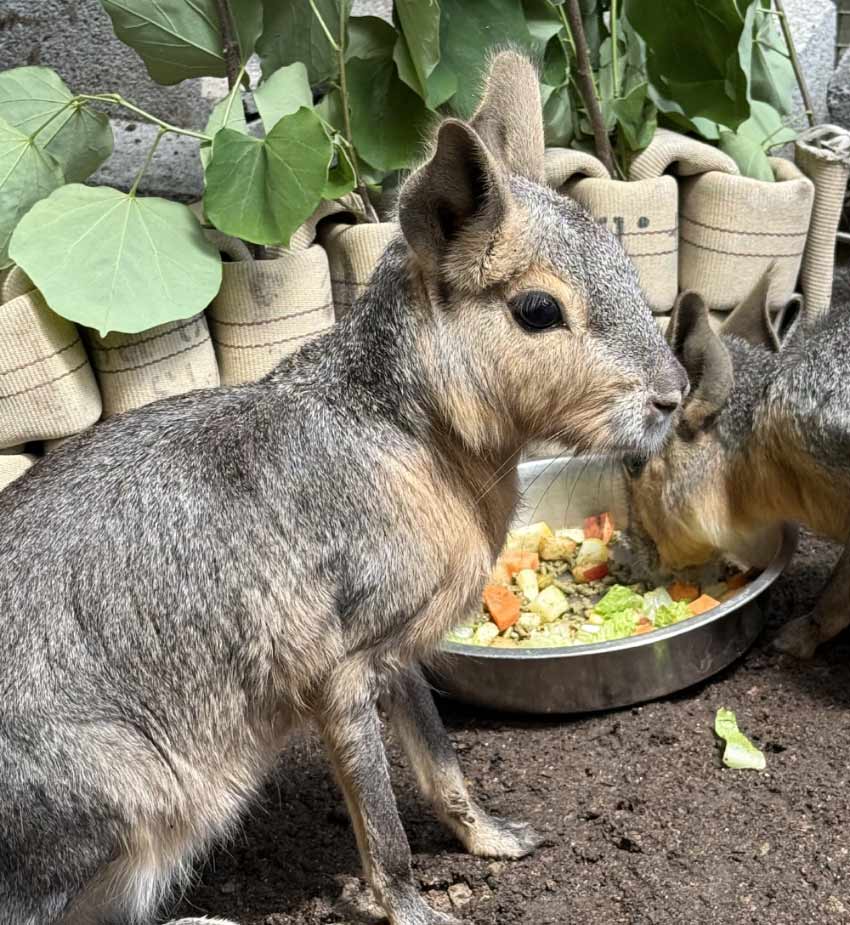
Long-legged rodents with body shape similar to hoofed animals. They have long ears and short tails. Their coat is primarily gray/brown with a white patch along the chest and stomach, and orange around the head and flanks. The mara has four toes on their front feet and three toes on their hind feet; each toe has a strong claw.

Lifespan

Natural Habitat: unknown
Under Human Care: 14 years

Threats

Their greatest threats are hunting (for their skins) and habitat loss. As grassland is converted to pasture, habitat is reduced for maras. Sheep farming is an especially big threat, as this has resulted in competition for resources as they are both herbivorous species.

Status

Near threatened

What are AZA Zoos doing for

Patagonian Mara

Patagonian Mara in AZA-accredited facilities are collaboratively managed through programs called Species Survival Plans (SSPs) . These programs ensure the species maintain a genetically diverse and biologically sound population throughout accredited institutions.

Fun Facts

Their long limbs allow maras to run up to 35mph, faster than Usain Bolt!

Despite looking like a combination of a hare and small deer, these animals are the second largest rodent on earth.

Like some ungulates, maras engage in a behavior called stotting, where they jump high into the air and land on all four feet. This behavior is thought to signal speed and stamina, which discourages predators from chasing them.

Maras practice coprophagy: they eat thier own poop. They also have been observed visiting sheep ranches and eating their poop too!

Patagonian Mara

Scroll to Top