
Meet Our Animals
The Brandywine Zoo proves that great things do come in small packages. The Zoo features animals from the tropical and temperate areas of North and South America, Asia and Africa. Our animals range from more common species to the highly endangered. All enjoy natural settings and welcome your visit to the zoo. Some animals may be off exhibit during cold weather.
Coendou prehensilis
Prehensile-tailed Porcupine
Habitat
Geographic Region & Range
Diet
Physical Description
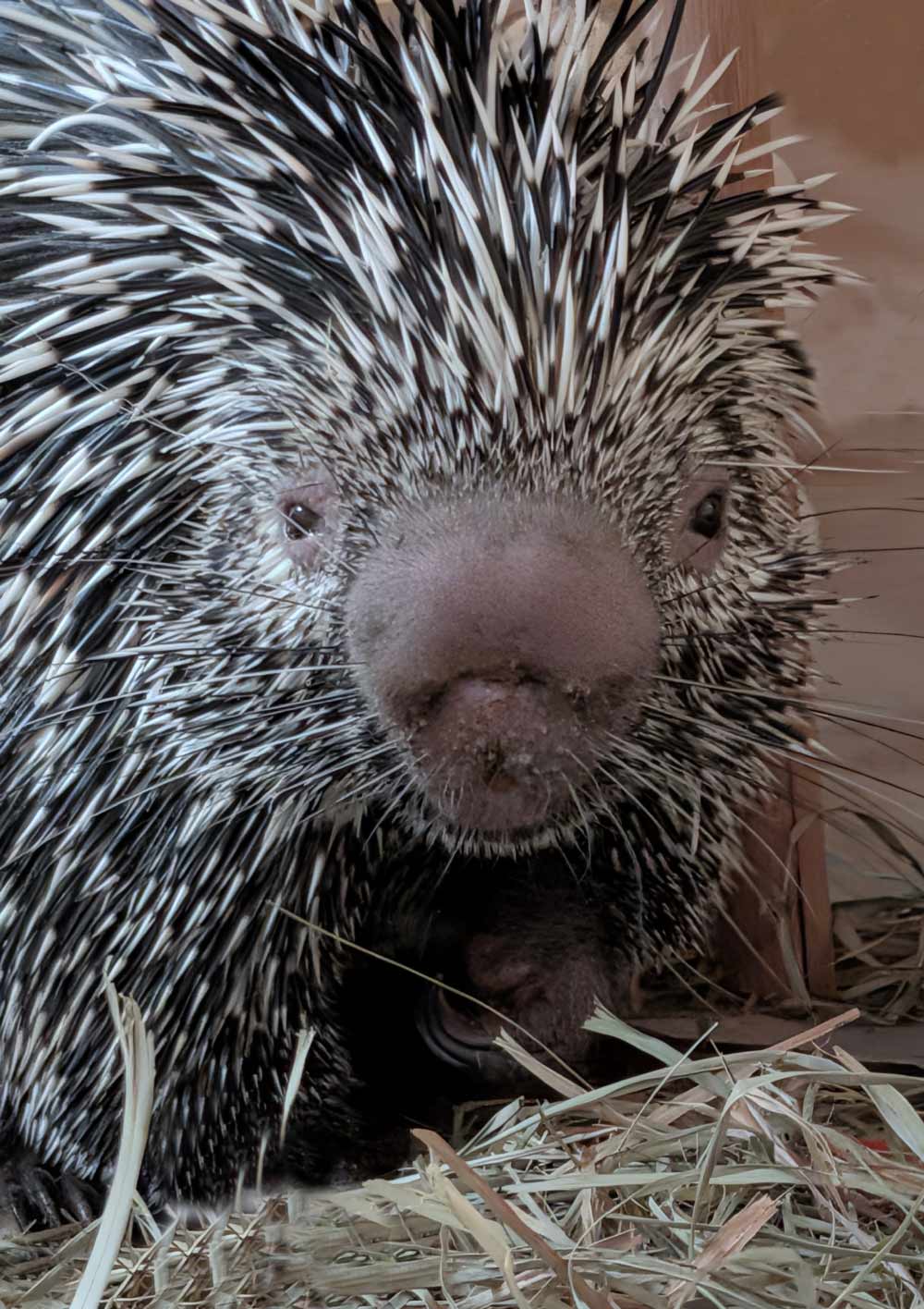
Prehensile-tailed porcupines have short, thick quills and their body color ranges from yellowish to almost black. Their tail is long, quill-less, and prehensile with a callus pad on the end of the dorsal side. The prehensile-tailed porcupines feet all have four toes and long claws, adapted for gripping, aiding in their arboreal lifestyle.
Lifespan
Natural Habitat: unknown
Under Human Care: 12 to 17 years
Threats
Status
What are AZA Zoos doing for
Prehensile-tailed Porcupine
This species is collaboratively managed through programs called Species Survival Plans (SSPs) that ensure a genetically diverse and biologically sound population throughout accredited institutions. Around half of prehensile-tailed porcupines in AZA institutions are ambassador animals.
Fun Facts
Prehensile-tailed porcupines belong to the group of porcupines called New World Porcupines, which are found throughout the Americas and are arboreal with relatively smaller quills.
A baby porcupine is called a porcupette! They have soft quills at birth that harden after a few hours.
Porcupine teeth are orange or red in color because the enamel (outer layer of teeth) is rich in iron.
Unlike most other rodents, these porcupines have a relatively long lifespan and slow reproductive rate.