
Meet Our Animals
The Brandywine Zoo proves that great things do come in small packages. The Zoo features animals from the tropical and temperate areas of North and South America, Asia and Africa. Our animals range from more common species to the highly endangered. All enjoy natural settings and welcome your visit to the zoo. Some animals may be off exhibit during cold weather.
Bucorvus abyssinicus
Abyssinian Ground Hornbill
Habitat
Geographic Region & Range
Diet
Physical Description
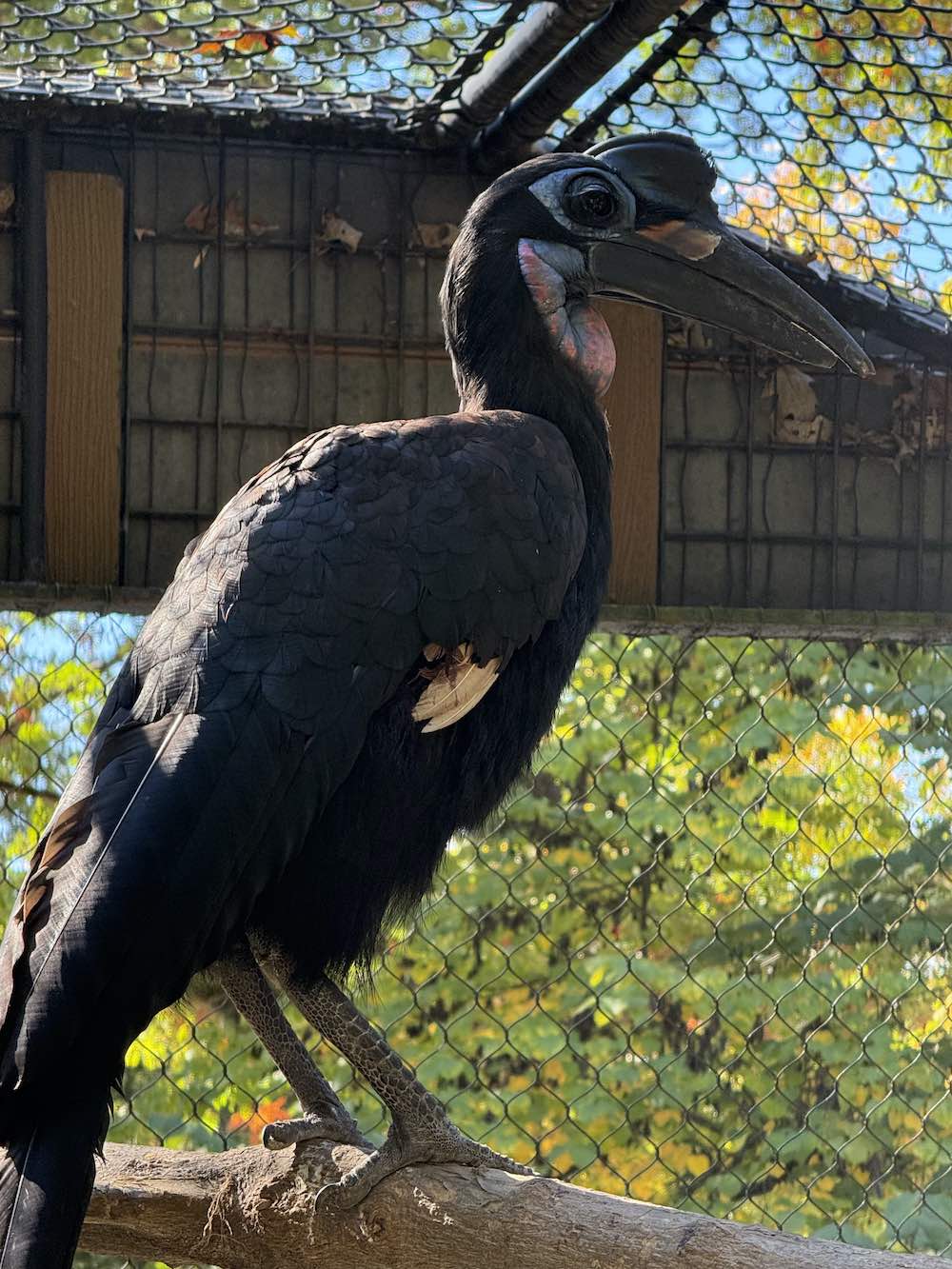
A large, terrestrial bird (roughly the size of a turkey) with black and white feathers. Facial skin around the eyes is blue and around the eyes is either blue or a mix of blue and red. The long beak is topped with a bony casque.
Lifespan
Natural Habitat: unknown
Under Human Care: up to 40 years
Threats
Status
What are AZA Zoos doing for
Abyssinian Ground Hornbill
Abyssinian Hornbills populations within zoos and aquariums accredited by the Association of Zoos and Aquariums (AZA) are managed by a SSP (Species Survival Plan) program. SSPs manage ex situ populations to ensure genetically diverse, demographically varied, and biologically sound populations. There is also a SAFE (Saving Animals From Extinction) program that targets conservation impact in the Abyssinian Ground Horbill’s natural habitat.
Fun Facts
Their “eyelashes” are actually modified feathers that protect their eyes!
Will travel up to 7 miles (11km) per day in search of food. They have also been seen following ungulate herds and forest fires to find prey among the disturbances.
Northern ground hornbills prefer drier and less wooded areas compared to the Southern ground hornbill.
They can use the sharp point of their long beak to manipulate the ground in search of prey.